




 सुनचाँदी
 विनिमयदर
 मिति रुपान्तरण
 पेट्रोलको भाउ
 तरकारी / फलफूल
 मेरो एउटा कुरा छ
 AQI
AQI मौसम
मौसम स्न्याप
 रेडियो लाइभ
 बैंक ब्याजदर
 युनिकोड टुल्स
 सेयर मार्केट्स
 राशिफल
 सिनेमा बोर्ड
 निर्वाचन पोर्टल

Kathmandu. Nepal’s agriculture sector has been in a state of flux in recent years. On the one hand, farmers are looking for fair price for their produce, while on the other hand, industrialists are trying to make quality domestic rice competitive with imported products.
The problem of farmers not getting the price for their produce and the shortage of fertilizers and seeds is an old problem, but in recent times, the industrialists are also facing another serious challenge. Industrialists who buy paddy from farmers and supply rice to consumers are also facing a serious problem.
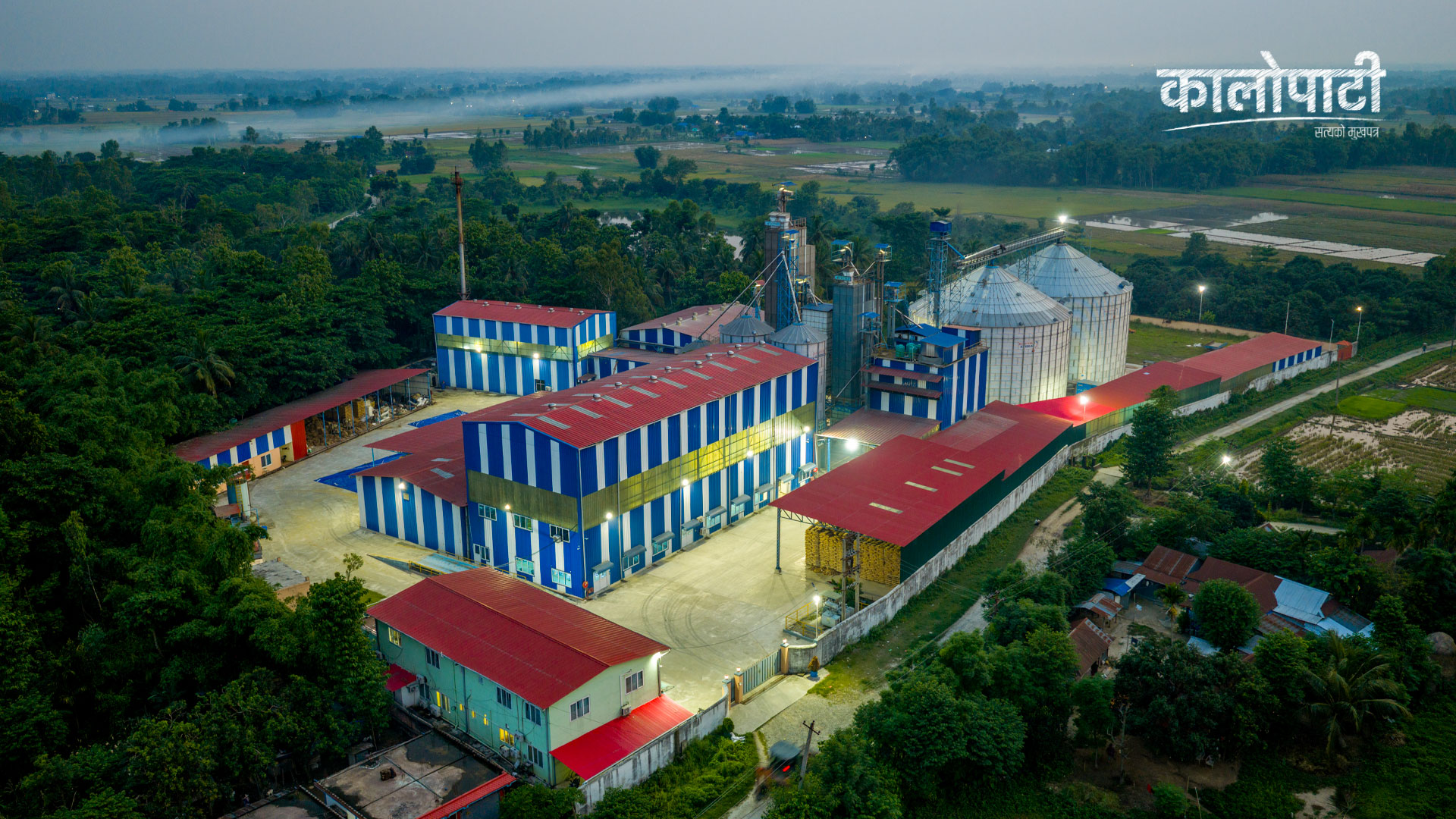
Birendra Bahadur Basnet, proprietor of Arzoo Rice Mill in Morang, is also facing a similar problem. According to him, the biggest crisis in the rice and rice industry at present is the capital stuck through borrowed transactions, not production, market or raw materials.
According to Basnet, around Rs 30 million of Arzoo Rice Mill, which has a turnover of Rs 15 billion a year, has been stuck in the market. According to Basnet, the industry has to go through the legal and administrative process due to the unpaid amount it has to collect from wholesalers and retailers in various cities including Kathmandu, Pokhara.
According to him, rice is sold in cash when it reaches the end consumer. The money paid by the consumers has been stuck at the level of the middle traders, which has created a situation where the capital of the industrialists is blocked. This is the reason why industrialists have to spend more time and energy on borrowing money than expanding their business, he complained.
According to Basnet, although there is some experience of facilitating the new government, it is necessary to make the loan recovery more effective. He believes that it would be a big relief to the industrialists if the mechanism to pay the traders who do not pay the money is effective by calling them through the police administration and making immediate payment or taking legal action soon.
According to him, if the current problem of Rs 30 million is not resolved on time, it can be converted into billions of rupees in the future. Therefore, he says that this should be taken as a challenge not only of one industry but of the entire business system. He said that preparations are being made to take this issue forward as a common campaign of the industrialists in the coming days.
Despite the credit crisis, Arzoo Rice Mill has prioritized its relationship with farmers. According to Basnet, the industry has been purchasing paddy from farmers as per the minimum support price fixed by the government. Therefore, he claimed, there is no significant dissatisfaction from the farmers. He, however, termed the shortage of chemical fertilizers as a global problem not only in Nepal but also in the world.
The Arzoo Rice Mill has an annual paddy processing capacity of 30,000 to 35,000 tonnes. The industry is not limited to rice production but is planning to establish a complementary industry that uses Kanika and rice bran after processing. According to Basnet, the goal is to add value by fully utilizing the product.
Basnet’s other emphasis is on the consumption of indigenous rice. According to him, Nepali rice is not inferior to imported rice in terms of quality, rather it is better in many cases. He said that the status of pesticides can also be obtained as it can be traced to the fields where it is produced.
He argues that the notion that bread is always better than rice from the point of view of health is not scientifically correct. He suggested that Nepali rice should be consumed in balanced quantity as rice is gluten-free food. Stating that the culture of eating plate full of rice was changing as in the past, he urged all to include Nepali rice in daily diet as a balanced diet.
According to him, the rice produced in Nepal has the capacity to compete with the imported rice in terms of both price and quality. He believes that if Nepali consumers choose domestic products, it will directly benefit farmers, industries and the national economy.
The journey from rice production to the consumer’s kitchen is not only a matter of farming and industry, but also about business discipline, timely payment and trust in domestic production. The issue raised by Arzoo Rice Mill over a loan of Rs 30 million indicates that there is a need for a more systematic business culture in Nepal’s agribusiness.
प्रतिक्रिया दिनुहोस्