




 सुनचाँदी
 विनिमयदर
 मिति रुपान्तरण
 पेट्रोलको भाउ
 तरकारी / फलफूल
 मेरो एउटा कुरा छ
 AQI
AQI मौसम
मौसम स्न्याप
 रेडियो लाइभ
 बैंक ब्याजदर
 युनिकोड टुल्स
 सेयर मार्केट्स
 राशिफल
 सिनेमा बोर्ड
 निर्वाचन पोर्टल
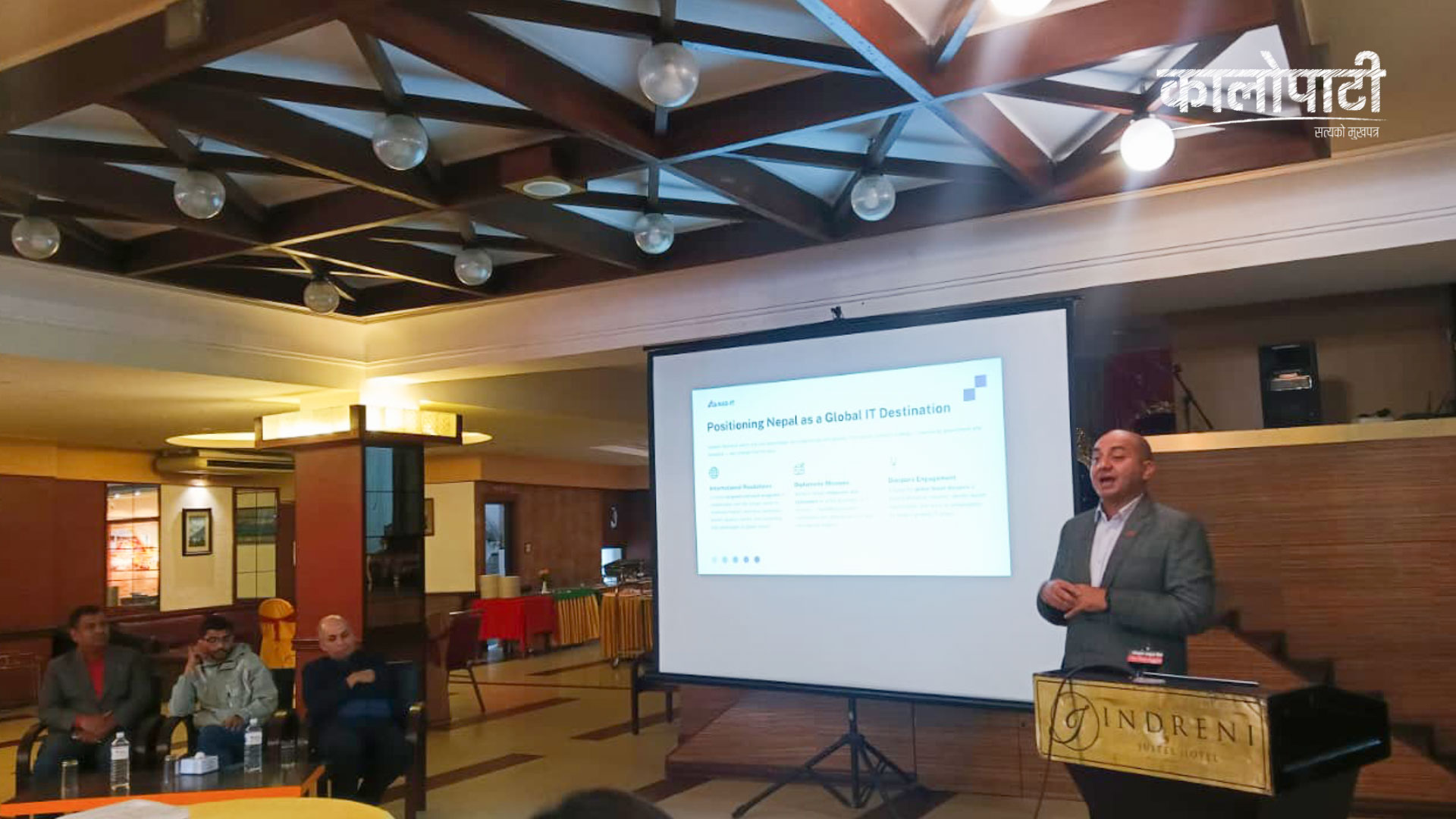

Kathmandu. Information technology and software services entrepreneurs have urged the government to give high priority to the IT industry through the budget for the coming fiscal year 2083/84.
The pre-budget recommendations submitted by Nepal Association for Software and IT Services Companies (NAS-IT) to the government have included topics ranging from tax reforms, institutional restructuring, education, employment, cyber security and export promotion.
The organization has stated that a long-term and competitive policy arrangement is necessary to develop the IT sector as the main basis of economic transformation in Nepal. The recommendation has asked the IT companies to pay only 1 percent income tax on their net profit for 10 years. It is expected to support innovation, infrastructure development, human resource expansion and reinvestment.
Similarly, export-oriented IT companies have been advised to provide 8 percent export credit. According to the organization, if such facility is available, it will be easier for Nepali companies to compete in the international market, foreign currency earnings will increase and employment will be created.
The organization has also demanded to make the provisions related to Value Added Tax (VAT) clear and practical. It has been suggested that the VAT refund process should be simple, fast and timely for companies exporting IT services and products.
It has also urged to improve the personal income tax to stop the exodus of manpower working in the IT sector. The agency has said that the highest rate of income tax for IT professionals should not be more than 25 percent. This is expected to help retain skilled manpower in Nepal and compete with foreign companies.
The recommendation also includes a provision to levy tax only at the time of sale of ‘sweat equity shares’. It is said that it would be appropriate to impose tax only at the time of sale as it would be a financial burden for startup companies to be taxed at the stage of grant or vesting.
The organization has pointed out the need for Nepal to extend the Double Taxation Avoidance Agreement (DTAA) with major trading countries. Such agreement with countries including the US, UK, Australia and others is believed to help attract foreign investment, expand outsourcing services and ease the international business of Nepali companies.
It has also demanded that government agencies should give priority to domestic companies in software purchase and information system development. It has been suggested that the IT contract of less than Rs 100 million should be reserved for Nepali companies and at least 30 percent of the contracts above that should be executed through Nepali companies. This will strengthen local industries and facilitate long-term maintenance and system improvement.
It has also suggested that the government should collaborate with the private sector to launch targeted programs to establish Nepal as an attractive IT destination in the international arena. Nepali IT services and products should be promoted through Nepali embassies and diplomatic missions in foreign countries.
The organization has also demanded the formation of a national level IT promotion board. It has been proposed that the Board should be responsible for policy coordination, investment promotion, digital transformation and international market promotion with representation from both the government and private sector.
Likewise, it has been suggested to include curriculum related to IT and Artificial Intelligence (AI) from the school level, separate budget for teacher training and develop a skill-oriented education system in line with the industry.
Similarly, it has urged the government to make the Labour Act flexible as per the nature of the IT industry, simplify the project-based employment system and simplify the process of bringing in foreign expert manpower.
The memorandum calls for the development of product-based IT companies, AI and software-as-a-service (SaaS) companies, building secure home cloud infrastructure, developing Nepali language-friendly AI models, and expanding digital public services. The recommendations also point out the need to update laws related to cybersecurity and data privacy. According to the organization, a comprehensive legal framework related to modern cybersecurity, data protection and digital transactions should be created by amending the Electronic Transaction Act.
Stating that the IT sector could make a big contribution to the country’s economy through export, employment and innovation, the organization urged the government to bring a clear, competitive and long-term policy through the upcoming budget.
प्रतिक्रिया दिनुहोस्