




 सुनचाँदी
 विनिमयदर
 मिति रुपान्तरण
 पेट्रोलको भाउ
 तरकारी / फलफूल
 मेरो एउटा कुरा छ
 AQI
AQI मौसम
मौसम स्न्याप
 रेडियो लाइभ
 बैंक ब्याजदर
 युनिकोड टुल्स
 सेयर मार्केट्स
 राशिफल
 सिनेमा बोर्ड
 निर्वाचन पोर्टल
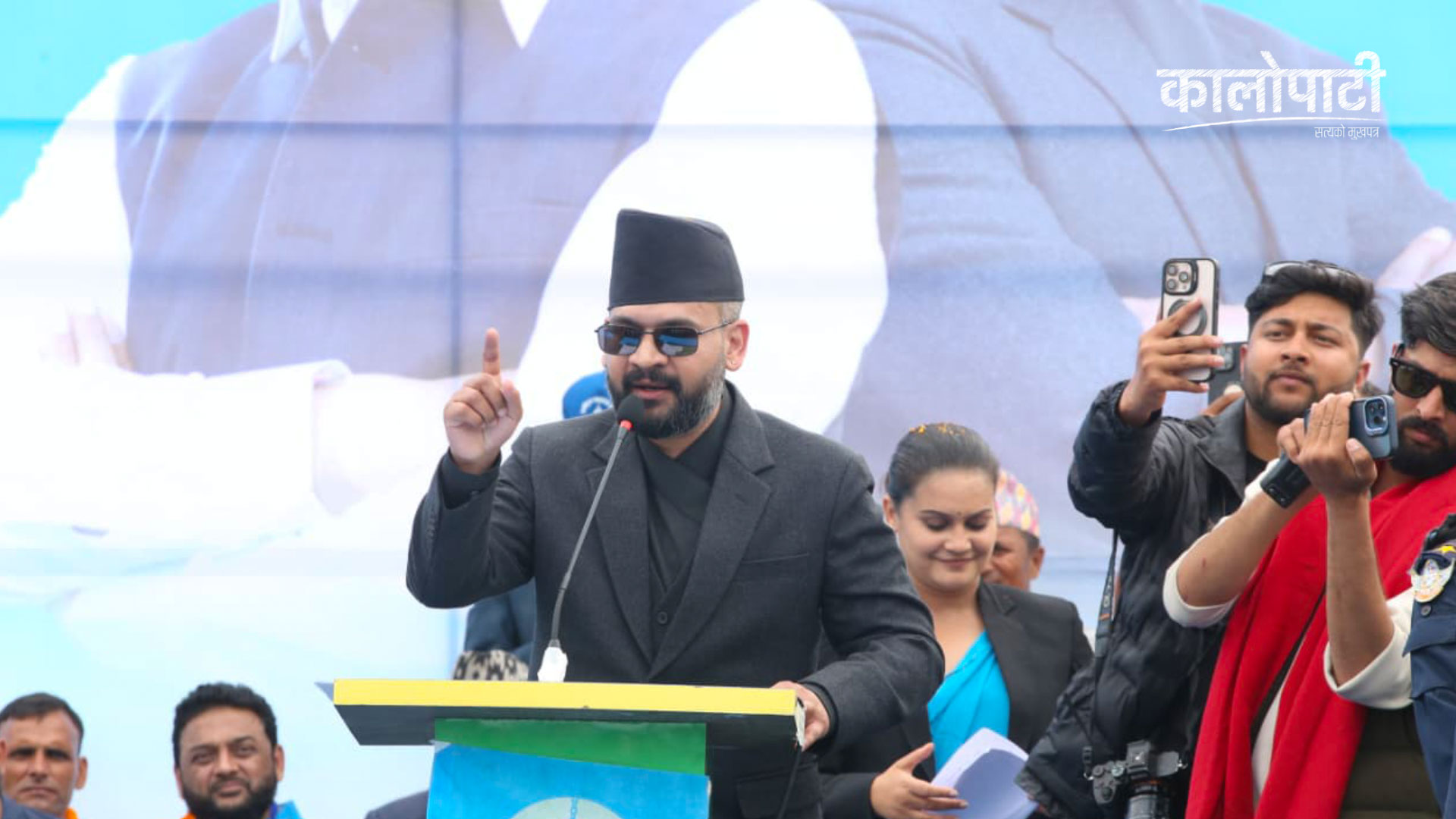

– Kalopati Explainer
A new era has begun in Nepal’TAG_OPEN_span_79 s politics. Prime Minister Balendra Shah Balen, who took over the reins of power from the rebellion of the ‘Gen-Z’ generation and the wave of alternative politics, is currently under the close watch of the world community. To become the executive head of the country directly from the mayor of Kathmandu and get almost two-thirds support was a political miracle in itself. But the toughest test he will face after ascending to power is not domestic politics but the “diplomatic balance”.
Balen, who refused to meet foreign ambassadors for a long time after being elected prime minister, finally broke his silence today through a group dialogue.TAG_OPEN_span_78 This dialogue was not just an official meeting, but also an indication of a new diplomatic roadmap for a changing Nepal.
Collective Dialogue: Balen’s Message to the ‘Power Nation’
} Normally, as soon as a new prime minister is appointed, ambassadors of neighboring countries and powerful countries would line up to congratulate him. But this time, Balen completely rejected that tradition. He held a ‘group dialogue’ by keeping all the ambassadors in a single hall today, rejecting dozens of proposals for personal meetings.
This clearly means that Balen does not want to be influenced by any one country and wants to spread the message of ‘sovereign equality’ by keeping everyone at an equal distance.TAG_OPEN_span_76 In a short speech of about two minutes, he emphasized two main things:
- is not a breakdown in continuity: The arrival of a new government does not mean a retreat from past international commitments.
- Policy stability: He tried to convince foreign investors and powerful countries that Nepal’s policy would now be ‘predictable’.
In the past, Nepal’s foreign policy and terms of foreign investment used to change with the change of government. Balen’s commitment to break it is a positive sign for the international community, but will the world community trust him immediately? That’s the main question right now.
‘Unpredictable’ Balen and international skepticism
‘stability’ and ‘predictability’ are considered to be the most important in international diplomacy. But Balen’s image is established as an “unpredictable” leader. Some of his moves in domestic politics, most notably his time as mayor of Kathmandu, have portrayed him as a populist but risky leader.
This is the reason why not only neighboring countries India and China, but also the Western powers are suspicious of Balen.TAG_OPEN_span_71 Diplomats have not been able to find a concrete basis for who he will arm and when to sideline. In today’s dialogue, he tries to show himself to be ‘stable’, but it has yet to be tested in practice.
Relations with neighbors: Coldness with China and attempts to ‘please’ India?
The biggest challenge in Balen’s diplomatic journey seems to be with its northern neighbor, China.TAG_OPEN_span_70 China has shown serious concern over the presence of monks and religious ceremonies at Sheetal Niwas during the swearing-in ceremony of the Prime Minister. China has linked it to the “Tibetan context”, which indicates that the relationship has cooled off initially.
TAG_OPEN_span_69 The distance from China is not new to Balen. When he was mayor, he was portrayed as an illiberal leader for stopping the Chinese embassy in Thamel and rejecting China’s official invitation. Moreover, his silence on the ‘Nepal-China Friendship Industrial Park’ (project under the BRI) in Jhapa is being interpreted by the Indian media as ‘anti-China’.
TAG_OPEN_span_68 On the other hand, some have commented on the chanting of Swasti by the batuks during the oath-taking ceremony as an attempt to appease India. But India is also not fully confident about Balen. Balen’s stance on keeping the map of ‘Greater Nepal’ and his nationalist image has always alarmed Indian diplomats.
Western-leaning discussion and balance of power
In Kathmandu’s political circles, Balen has been accused of being close to the ‘American line’ or the Western powers.TAG_OPEN_span_67 The way the international media published his profile together before the election has given rise to this suspicion.
For a geopolitically sensitive country like Nepal, it can be suicidal to lean towards one power. Although Balen tries to show himself ‘balanced’ through today’s dialogue, it remains to be seen how he will implement his ‘Nepal First’ policy in the midst of the triangular interests of America, China and India.
Appointment of Ambassadors: The first ordeal of diplomatic skill
}
Diplomacy is not only seen in speech, but in characters. Within days of taking office, Balen recalled the ambassadors of five countries — India, South Korea, Australia, Sri Lanka and South Africa. What kind of face Balen sends to these places by recalling these ambassadors appointed on the basis of political divisions will determine his real diplomatic direction.
According to the manifesto of the Rastriya Swatantra Party (RSP), it is an opportunity for Balen to appoint ambassadors on the basis of ‘meritocracy’ and conduct their performance audits.TAG_OPEN_span_64 If he again sends his close associates or party cadres in the old style, his slogan of ‘reform’ will be just an illusion. But if he prefers qualified and career diplomats, Nepal’s declining diplomatic credibility can be saved.
Economic Diplomacy and the Swarnim Wagle Factor
One of the strengths of the Balen government is the presence of Swarnim Wagle as the Finance Minister.TAG_OPEN_span_63 Wagle has good relations with donor agencies such as the World Bank, IMF and Asian Development Bank. Due to this, there is a possibility of Nepal making a big leap in ‘economic diplomacy’.
As mentioned in the RSP manifesto, if the plan to add ‘economic consulates’ to the missions and use BRI or other foreign aid for the national interest is successful, Balen’s popularity will increase in the diplomatic circle as well.TAG_OPEN_span_62 Balen has also tried to attract foreign investors by talking about investment security and policy stability in today’s dialogue.
Prime Minister Balen Shah now has an unprecedented mandate and two-thirds majority.TAG_OPEN_span_61 The credibility of the opposition parties has made him even more powerful. But in diplomacy, domestic power alone is not enough, there is a drought of ‘credibility’.
Overall,
For Balen, the first priority should be to end the “crisis of trust” with neighbors and powerful countries.TAG_OPEN_span_60 He will have to transform himself from an “unpredictable” rebel to a “responsible politician”. Today’s collective dialogue is a symbolic beginning of that. If he can maintain his diplomatic skills and policy stability, Nepal can regain its lost respect on the world stage. Otherwise, there is a risk that diplomatic immaturity will push Nepal into an even bigger geopolitical crisis.
Balen turns this power into an opportunity or does he get lost in the face of a challenge? The answer will be given by his appointment of ambassadors and dealings with neighbours in the coming days.
प्रतिक्रिया दिनुहोस्