






 सुनचाँदी
 विनिमयदर
 मिति रुपान्तरण
 पेट्रोलको भाउ
 तरकारी / फलफूल
 मेरो एउटा कुरा छ
 AQI
AQI मौसम
मौसम स्न्याप
 रेडियो लाइभ
 बैंक ब्याजदर
 युनिकोड टुल्स
 सेयर मार्केट्स
 राशिफल
 सिनेमा बोर्ड
 निर्वाचन पोर्टल

Kathmandu. World Water Day is celebrated across the globe today (March 22). The World Water Day is celebrated since 1993 at the call of the United Nations to raise awareness on the importance, necessity and conservation of water. On this day in Nepal, various programs are organized to conserve water sources and access to clean drinking water with the mantra ‘Water is life’.
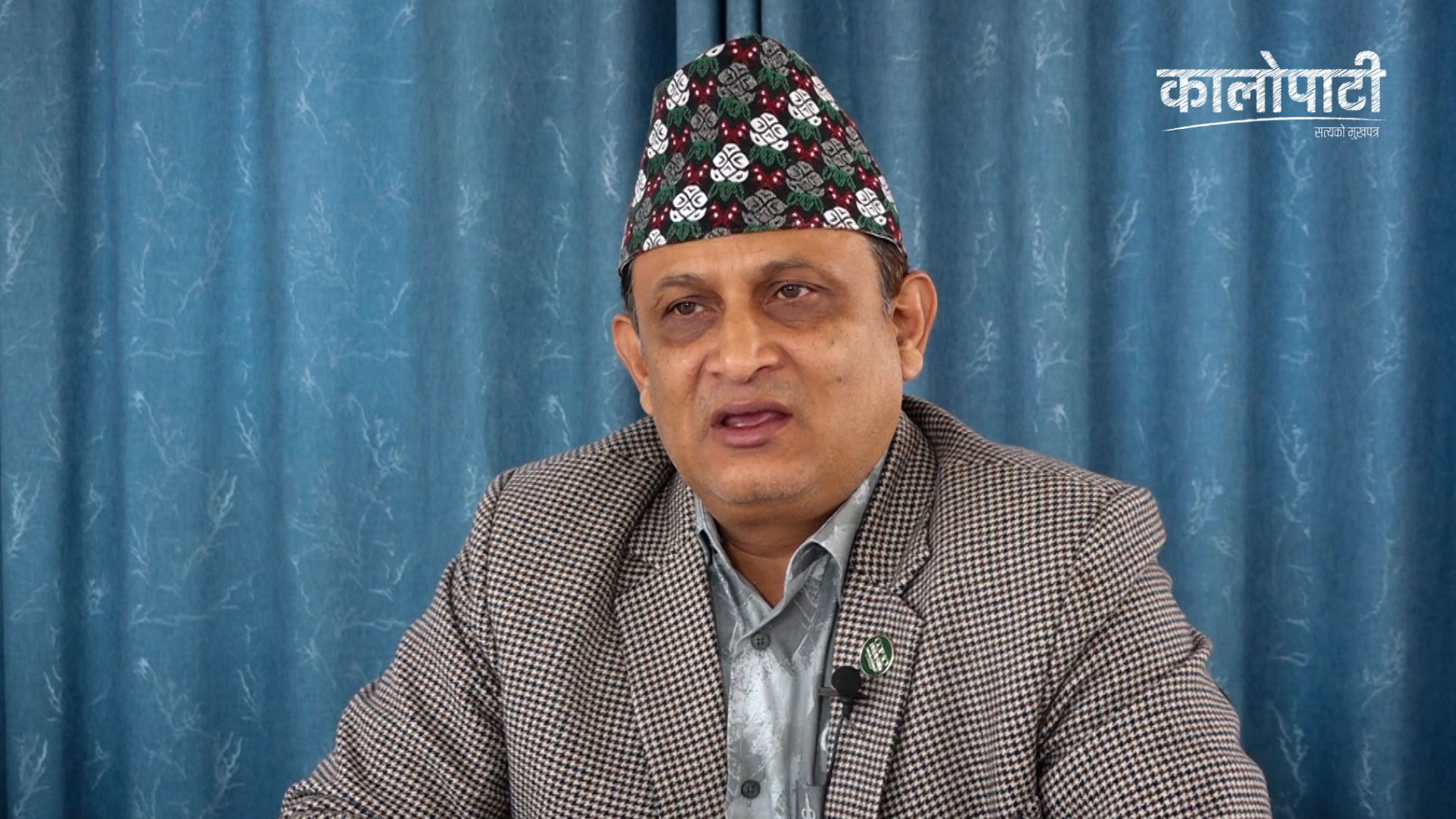
Expert member of the National Council for Climate Change Management, Dr. Bimal Raj Regmi, on the other hand, pointed out that climate change was not only a global problem but a direct crisis for Nepal.
“First of all, climate change is now one of the most complex problems in the world. Climate change is a crisis in Nepal. The effects are multifaceted. Now, as greenhouse gas emissions increase, the temperature of the earth and changes in precipitation are increasing. ’
According to him, due to the increase in greenhouse gas emissions, the temperature of the earth is continuously increasing, which is changing the rainfall pattern and increasing the incidence of disasters like heavy rain, drought, flood and landslide. A country like Nepal, whose greenhouse gas emissions are negligible, is the country that suffers the most. According to him, the main reasons for this are geographical features, socio-economic conditions and natural sensitivity. He said, “The impact of climate change is high in Nepal due to its geographical location, its socio-economic environment. We can see it directly affecting our ice reserves, especially as temperatures rise. Now, due to the change in rainfall, it is having a huge negative impact on the water cycle as a whole and our water source. ’
Impact from the mountain to the source
According to him, the direct impact of the rise in temperature has been seen in the mountainous region. As glaciers and glacial lakes melt, there is a risk of depleting long-term water resources. “The Himalayas are the backbone of water resources not only for Nepal but for the entire South Asia,” says Regmi. ’
Likewise, he said that the change in the rainfall system has made the water cycle imbalanced. He also claimed that the tendency of excessive rainfall in short term and long dry period is increasing. This has increased the risk of floods and inundation on the one hand, while on the other hand, the groundwater recharge is decreasing as the ground is not absorbing water. He said that due to the change in rainfall, there is a big problem in the water sources.
He said, “Due to the change in rainfall, there is a big problem in water sources.” Because there is a lot of rain in a short time and there is less rain, it is two techniques, too much water to less water, now when it rains, it rains a lot in a short time, and when the land does not think, it becomes too much, it causes disasters. Now, when it rains in a short time, it is a matter of storing the reserves of our reservoirs, but now when there is more rain in a short time, it has come in the form of a catastrophe and it has caused huge economic and non-economic losses. ’
Water scarcity from village to city
Regmi said that the water sources in various districts of the country are drying up and the settlements are on the verge of becoming empty due to the lack of drinking water. According to him, the incidents of migration are increasing in districts like Manang, Mustang, Okhaldhunga and Ramechhap due to lack of water.
“Now there are cases of villages emptying due to lack of water. Be it Manang, Mustang or Okhaldhunga and Ramechhap in the east, we have heard of such incidents. “Climate change is directly drying up water sources and water sources, and water scarcity is making it harder to survive and people are forced to migrate or leave their homes,” he said. The problem is no different in urban areas. He said that unplanned urbanization, concrete structure and over-exploitation of land have made a difference in the natural shape of the water. Cities like Kathmandu have turned into concrete jungles and water cannot go into the ground,” he said.
Disaster Risk Increase
He said that incidents of floods, landslides and glacial lake outbursts have been increasing in Nepal in recent years. These incidents have increased both human and economic losses. According to Regmi, climate change has intensified such extreme events, which are also affecting the overall economy of the country. He said, “In a country like ours, the impact of climate change has already arrived. We have suffered a lot of losses. In the past few years, glacial lakes have erupted due to direct climate change. You listened to Rasuwa. Due to the heavy rains around Kathmandu, Kathmandu, Kavre and Lalitpur districts were affected. ’
Which provinces and districts are most vulnerable to climate change?TAG_OPEN_strong_41
According to expert Bimal Raj Regmi, although the impact of climate change is seen all over Nepal, its nature and intensity vary everywhere. According to him, risk can be understood on two grounds: disaster risk and socio-economic vulnerability.
In terms of disasters and climate-induced events, the hilly and mountainous districts of Koshi Province, Bagmati Province and Gandaki Province are at high risk. Districts like Sankhuwasabha, Taplejung, Sindhupalchowk, Rasuwa, Dhading and Ramechhap are particularly vulnerable to disasters like glacial lake outbursts, floods and landslides. Districts in the Terai region are the most affected by the risk of floods and inundations, especially in the various districts of the Madhes Province, which are causing huge loss of life and property.
On the other hand, based on socio-economic indicators, Karnali Province and Sudurpaschim Province are more vulnerable. These provinces have poor resilience to the effects of climate change due to poverty, lack of access and lack of infrastructure. In terms of water scarcity, the problem has spread across the country. He said that the problem of drying up of sources is increasing in the mountainous and hilly districts while a new type of crisis has emerged in the Tarai due to the depletion of groundwater level.
Solution: Localization and behavior change
}
Although reducing greenhouse gas emissions is essential for long-term solution to climate change, it is imperative for a country like Nepal to increase adaptation and resilience, he said. He stressed on the need of water conservation, collection and reuse, rainwater harvesting, conservation of water sources and watershed areas, water-friendly infrastructure development and adaptive technology in agriculture system.
Regmi said that although the policy is good, its implementation is weak. “The main way to solve the problem is to empower the local level,” he said, “because the impact of climate change is directly visible at the local level.” ’
Water Rights and State Responsibilities
The Constitution of Nepal has guaranteed clean drinking water as a fundamental right. But in practice, many communities are still deprived of this right. Therefore, it has been pointed out that the state should provide effective service delivery by localizing resources, technology and capacity.
Climate change has caused a deep crisis in Nepal’s water resources, from the mountains to the Terai. Its impact is not only on the environment but also on the social, economic and human aspects. In such a situation, effective implementation, local participation and responsible development model along with policy formulation are indispensable.
प्रतिक्रिया दिनुहोस्