











 सुनचाँदी
 विनिमयदर
 मिति रुपान्तरण
 पेट्रोलको भाउ
 तरकारी / फलफूल
 मेरो एउटा कुरा छ
 AQI
AQI मौसम
मौसम स्न्याप
 रेडियो लाइभ
 बैंक ब्याजदर
 युनिकोड टुल्स
 सेयर मार्केट्स
 राशिफल
 सिनेमा बोर्ड
 निर्वाचन पोर्टल
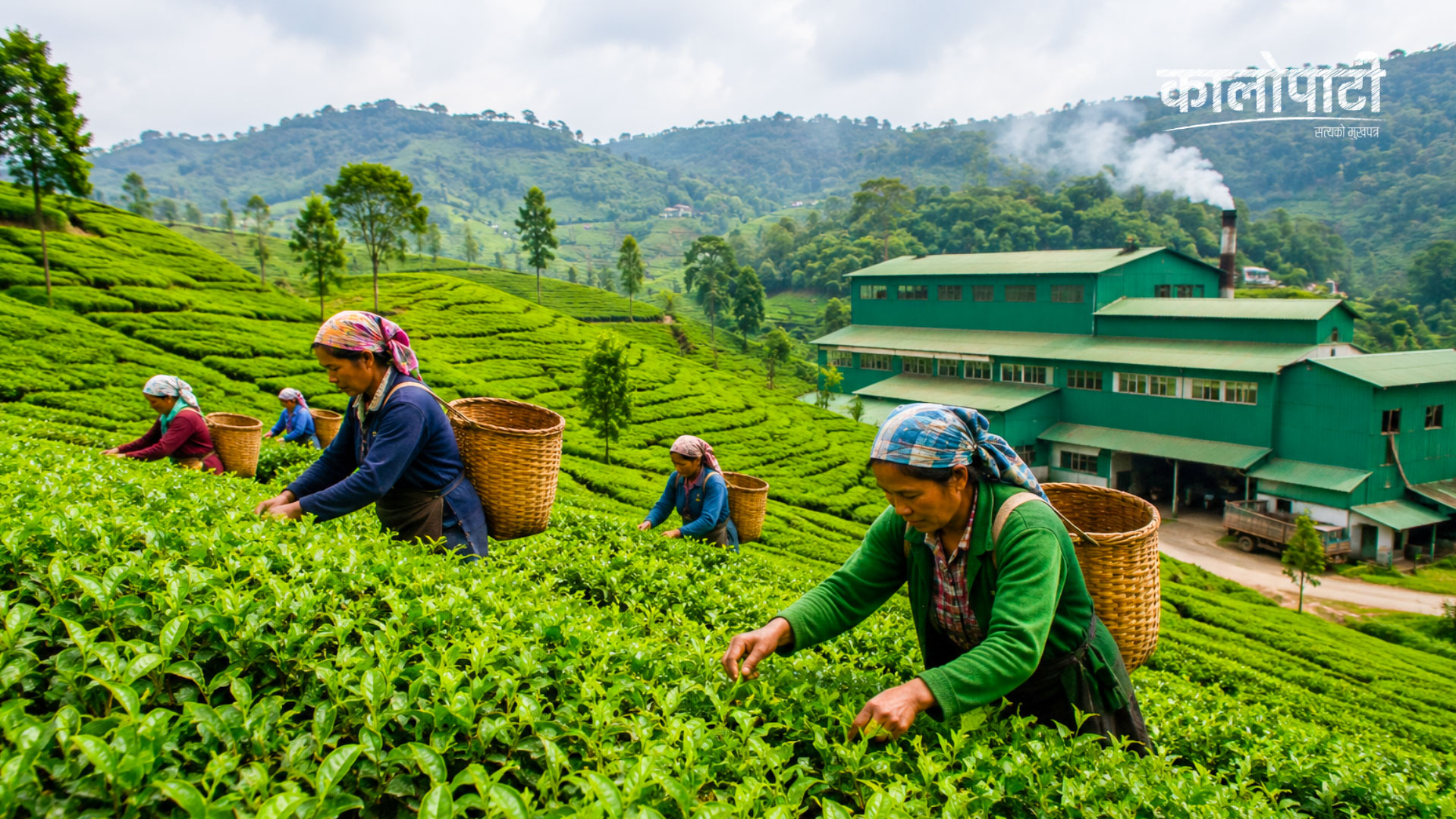

Kathmandu. The government has formed a special task force to resolve the problems faced by the tea industrialists.
Tea factories in Jhapa and Ilam districts, which were closed since June 1 and 19 due to obstruction in tea export by India, have resumed.
Senior vice-president of Nepal Tea Producers’ Association, Shiva Gupta, said that 30 CTC tea factories in Jhapa district have come into operation from Thursday after Prime Minister Balendra Shah’s secretariat assured of resolving the problems related to exports.
He said that the decision to operate the industries was taken after the government showed eagerness to address the demands. “The government formed a special task force, we opened the industry after the minister said that we will take the initiative soon,” Gupta told Onlinekhabar.
Gupta said that with the resumption of industries in Jhapa, tea factories in hilly districts are also in the process of reopening. “It has already opened in Jhapa and also in the hills,” he said, adding, “It will open from today or tomorrow.” ’
Some tea industrialists in Kathmandu
The Prime Minister’s Secretariat has formed a taskforce comprising representatives of various ministries and departments to resolve the problems seen in the tea sector. The taskforce has been asked to submit a report along with the measures for short-term, mid-term and long-term solution within two weeks.
Tea industrialists from Jhapa and Ilam are now in Kathmandu to hold discussions with the taskforce. They are holding discussions with the concerned authorities.
The members of the task force include senior officials from the Prime Minister’s Office, the Ministries of Finance, Home Affairs, Foreign Affairs, Agriculture and Customs, Department of Food Technology, Metrology and Tea Development Board (under secretary and director level). Similarly, the under-secretary at the Ministry of Industry, Commerce and Supplies has been assigned the responsibility of member-secretary of the taskforce.
Why were the industries closed }?
The export of Nepali tea has been affected since May 1 after the Tea Board of India implemented a new standard ‘Standard Operating Procedure’ (SOP) in the name of testing the quality of Nepali tea.
According to the new rules, every tea vehicle going to India will have to undergo a mandatory laboratory test, the report of which will take about 15 days and the fee will be Rs 11,500 per vehicle. As a result, the tea export was completely halted for 21 days.
After strong protests from Nepal, the Indian side gave a written agreement to replace each truck with ‘random sampling’, which lasted for two days.
However, the export came to a halt again after the Indian officials again instructed the exporters to collect samples and not to pick up the tea until the report was received. Due to this obstruction, the industrialists were forced to close down the industry.
When about 100 factories were closed, green tea leaves had grown in the orchards and turned into grass. More than 100,000 workers and 30,000 farmers were directly affected.
According to the association, Nepal produces more than 20 million kilograms of CTC and 6.5 million kilograms of orthodox tea annually.
According to Gupta, senior vice-president of the association, the decision was taken to open the industry for processing green leaves as the government has assured that the tea leaves of the farmers are on the verge of incurring loss of millions of rupees. However, the tea produced will be stored in the godown until the export is facilitated.
प्रतिक्रिया दिनुहोस्