















 सुनचाँदी
 विनिमयदर
 मिति रुपान्तरण
 पेट्रोलको भाउ
 तरकारी / फलफूल
 मेरो एउटा कुरा छ
 AQI
AQI मौसम
मौसम स्न्याप
 रेडियो लाइभ
 बैंक ब्याजदर
 युनिकोड टुल्स
 सेयर मार्केट्स
 राशिफल
 सिनेमा बोर्ड
 निर्वाचन पोर्टल
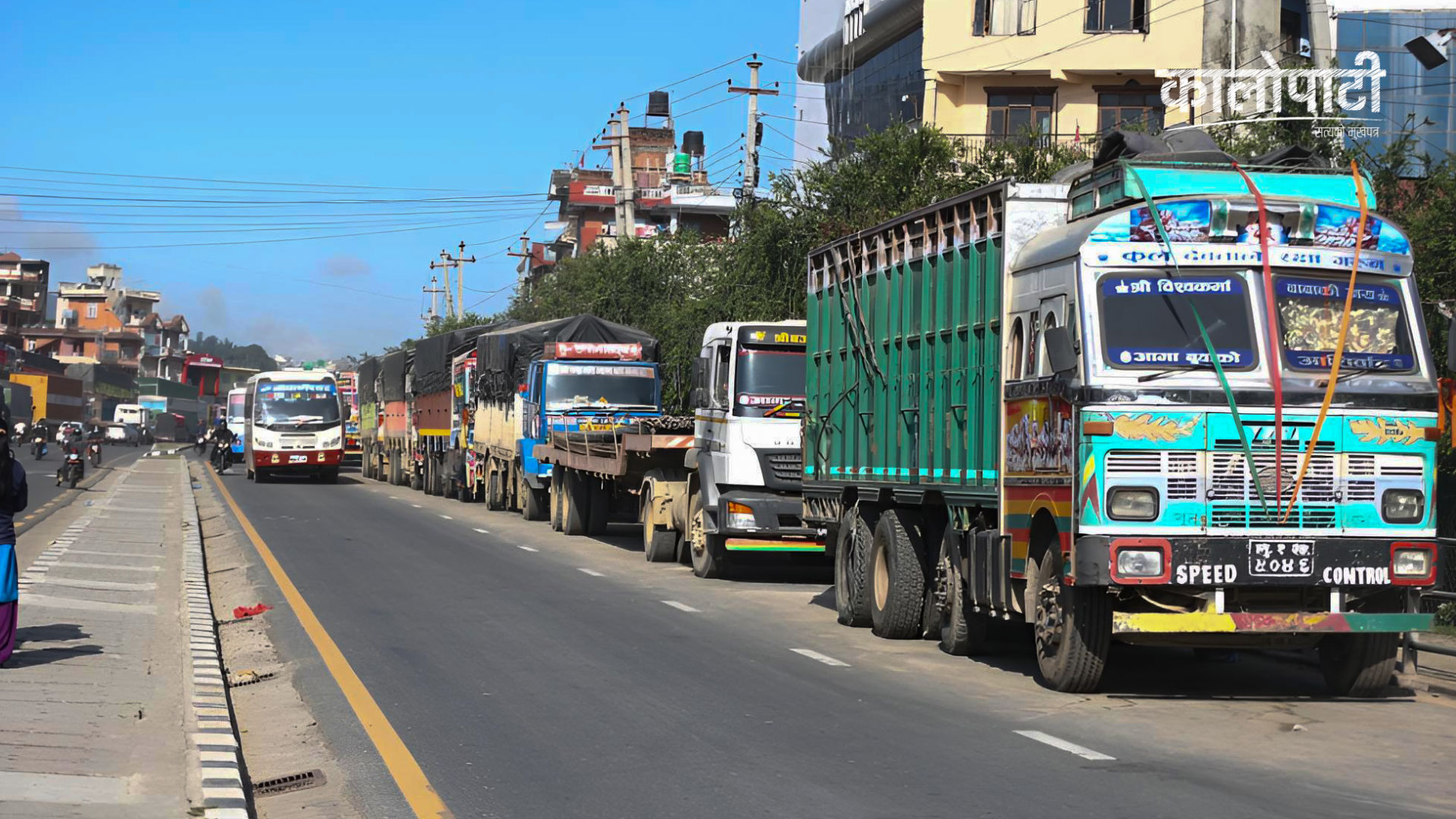

Kathmandu. There has been a ban on the loading of goods vehicles. The Department of Transport Management has written to the Transport Ministry of 7 provinces directing them to tighten the regulation of load carrying vehicles. The road damage was caused due to overloaded vehicles on Nepal’s roads.
There was also an increase in accidents due to overloading. On February 11, 2002, the Department sent a letter to the Transport Ministry of all seven provinces directing them to implement the load carrying regulation of cargo vehicles.
Transport entrepreneurs and stakeholders had been complaining for a long time that the heavy load of vehicles was overloaded, causing a big damage to the road infrastructure. Road accidents have increased due to brake failure due to overloading. The Department is to implement the provisions of the Vehicle and Transport Management Act-2049 BS and the Load Carrying Regulation Directive-2074 BS. According to the latest directive issued by the department, from now on, the total weight, load-bearing capacity and weightless weight of the vehicle should be clear in the registration blue book of every cargo vehicle. Section 16 (3) of the Motor Vehicles and Transport Management Act 2049 has made it mandatory.
However, the department has taken this step after it was found that some transport offices were arbitrarily maintaining load-bearing capacity. There is a maximum load limit for rigid trucks and trailers. Rigid trucks will not be allowed to carry a maximum of 35 tons and trailers or semi-trailers will not be allowed to carry more than 49 tons. According to the directive, goods vehicles plying on the road will now be allowed to transport goods only on the basis of their axle load.
A two-axle four-wheeler vehicle has a maximum load of 12 tons and a two-axle 6-wheeler can carry 16.2 tons. Three-axle trucks can carry 25 tons and four-axle 12-wheeler trucks can carry 31 tons. The vehicle has been set to carry a single axle of 10.2 tons, 19 tons for a tandem axle and 24 tons for a tridum axle. The department has also taken into account the number of tyres and the distance of the axle while determining the load on the basis of axle load.
The department claims that fixing the border in this way will increase the life of the road and make it easier to control the vehicles. If the load is more than the load limit fixed by the department, there will be a fine as per the law. Vehicles will be allowed to ply only after unloading the excess load on the road. Depending on the geographical situation and the nature of the goods, if the weight is more than 2.5 percent of the prescribed weight, it can be released without penalty.
However, vehicles carrying special goods such as petroleum products and gas bullets will be allowed to operate without the use of weight bridges under special circumstances. These vehicles will be monitored on the basis of bills and invoices. The department will monitor the weight bridges across the country and depute traffic police to control the load-loading. The Transport Management Office (TOM) has to comply with the gross vehicle weight set by the vehicle manufacturing company and the limit mentioned in Schedule-1 while registering, permitting and issuing test pass certificates.
If the vehicle manufacturer has not manufactured a body, it will have to determine the load-bearing capacity only by measuring the weight in the approved weight pool. Rajendra Baniya, general secretary of Federation of Truck Transport Entrepreneurs Nepal (FNNTE), said that the transport entrepreneurs have long urged the government to make arrangements for the vehicles transporting goods as per their capacity. He said, “We had raised the issue for a long time that we should make arrangements to carry goods only according to the capacity. We have taken the matter from the transport minister to the department.
The department issues guidelines but they are not implemented. This has been happening in the past as well. Carrying more load than capacity reduces the capacity of both roads and vehicles. There is a need to regulate the vehicles transporting foreign and domestic goods. The department should not only issue directives, but also implement them. ’
Acting President of Federation of Nepalese National Transport Entrepreneurs, Saroj Sitaula, said that the Department of Transport Management has done a good job by issuing a directive allowing vehicles to carry load only as per their capacity. He said, “There was a problem when the vehicles were carrying more goods or passengers than their capacity.
Vehicles carrying goods more than their capacity cause damage on the road and also cause road accidents. Accidents also occur when buses carrying passengers exceed their capacity. The department has done well by setting a load limit. This will reduce accidents and increase the life of the road. ’
प्रतिक्रिया दिनुहोस्